


Psychotherapy for Individuals & Couples+
BEYOND TALK THERAPY.
Depth-Oriented, Experiential, Expansive.

My practice is LGBTQ+ and neurodivergent affirming, culturally attuned, and trauma-responsive, with specialized training in trauma, eating disorders and co-occurring disorder, and relationship challenges.
Welcome. I'm glad you're here.
I'm Giulia (she/her), a licensed psychotherapist (LMFT) and the founder of Wildly Connected Therapy.
This practice grew from a personal and professional longing: to create a space where belonging is unconditional, exactly as you are. A space to explore what feels true to you, make sense of your experiences, and deepen your connection with yourself and the world around you.
Maybe you've spent years trying to understand yourself, yet still find yourself caught in familiar patterns. You've read the books, done the reflecting, and perhaps spent years in therapy, yet anxiety, old triggers, relationship dynamics, or ways of coping that no longer serve you continue to show up. I work with adults and couples navigating these complexities and intersections.


AN INTEGRATIVE & DEPTH-ORIENTED APPROACH
Grounded in psychodynamic therapy, with specialized training and certifications in:
- Eye Movement Desensitization and Reprocessing (EMDR)
- Ketamine-Assisted EMDR (KA-EMDR)
- Ketamine- Assisted Psychotherapy (KAP)
- Ecotherapy (also known as Nature-Based Therapy)
- Emotionally Focused Couple's Therapy (EFT)
- Parts work (IFS-informed)
and other evidence-based modalities
Specialties

Navigating Trauma
PTSD/cPTSD (complex trauma), attachement wounds, people-pleasing, guilt & shame

Eating Disorders & Co-Occurring Disorders
eating disorders & disorder eating, co-occurring substance use, neurodivergency, body image concerns, recovery, self-esteem, embodiment
Relationship Challenges
Couples, polycules, consensual non-monogamy, intimacy, attachment, communication, and relational patterns.

Identity Exploration
gender & sexuality, immigration and multicultural transitions, highly sensitive people (HSPs), belonging

Anxiety and Depression
anxiety, depression, burnout, chronic stress, perfectionism, high archievers

Existential Exploration & Expanded States
Existential questions, purpose and meaning making, eco-grief, eco-anxiety, psychedelic preparation & integration
My Approach
I believe many of the patterns that cause us pain — anxiety, self-criticism, perfectionism, people-pleasing, dissociation — develop as ways of surviving and adapting to difficult experiences.
Rather than pathologizing what feels hard, I'm interested in getting curious about it. Often, what we now experience as a problem once served an important purpose. Understanding these patterns can open the door to relating to ourselves with greater compassion and finding new possibilities for change.
This is at the heart of Wildly Connected Therapy: the understanding that nothing happens in isolation. Our struggles, relationships, identities, and ways of moving through the world are shaped by our experiences, the people around us, our communities, and the larger systems we live within.
My approach is integrative and depth-oriented, making room for these interconnected layers rather than reducing our experiences to a single explanation.

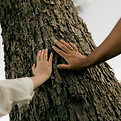
As an ecotherapist, I also bring the natural world into this work. Time outdoors can offer a different way of listening, noticing, and relating — creating space to reconnect with something larger than ourselves and explore our place within the web of relationships that sustains us.
This work creates space for what has been hidden, understanding the parts of ourselves that have had to adapt, and discovering new ways of relating to ourselves, one another, and the world around us.
Ready to begin?

“The more we can cultivate curiosity and compassion towards ourselves, the more we can heal our wounds.”
Richard C. Schwartz, Ph.D